

Table of Contents
Second Principle
The 66th verse of the second chapter of the Shrimad Bhagavad Gita offers a profound formula for happiness; by understanding, accepting, and viewing ourselves through the lens of this principle – and subsequently making the desired changes – we can fill our lives with joy.
Nāsti buddhir-ayuktasya na chāyuktasya bhāvanā

Na chābhāvayataḥ śhāntir aśhāntasya kutaḥ sukham
This verse conveys a remarkable insight: one whose mind is neither controlled nor steady cannot possess a steady intellect; without a steady intellect, how can one engage in self-reflection or meditation? Without meditation, there is no peace, and without peace, where is happiness?
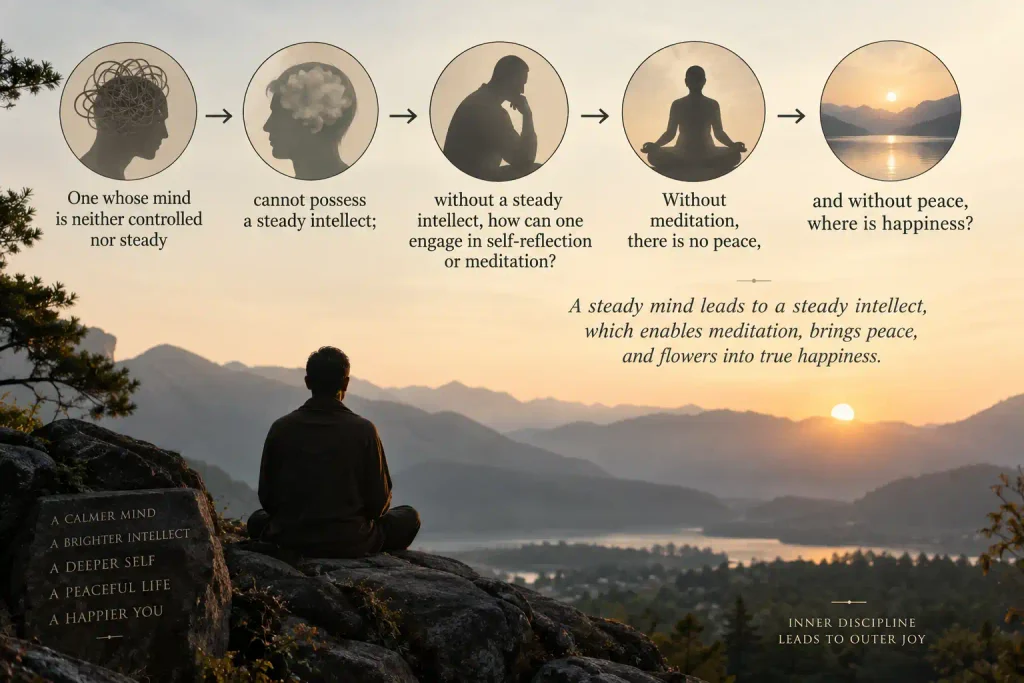
Attributes of An Undisciplined Mind
An undisciplined mind wanders aimlessly, and this aimless wandering leaves a person without direction or purpose. It continuously erodes our power of thought, weakening the mind and shattering our morale. Even performing a simple task begins to feel like an immense effort, and minor challenges appear insurmountable. Although our mind and thoughts are ostensibly our own, in reality, they are often shaped by external influences – events, objects, or people that have impacted us, whether positively or negatively.
A Disciplined Mind: A Protective Shield
Consider the immune system: when immunity is low, harmful bacteria and viruses quickly take hold, whereas a strong immune system neutralizes these threats – acting as a protective shield that destroys them before they can even enter the body. A disciplined life functions in much the same way. A disciplined person – one who keeps their thoughts organized and regulated – repels unwanted elements; such influences avoid or fear approaching them, knowing their attempts will prove futile. When we have no time or energy left for trivialities, we naturally shield ourselves from the very things that threaten our time, resolve, and energy. Therefore, self-discipline is essential; it is through discipline that our character is refined and our personality takes shape.
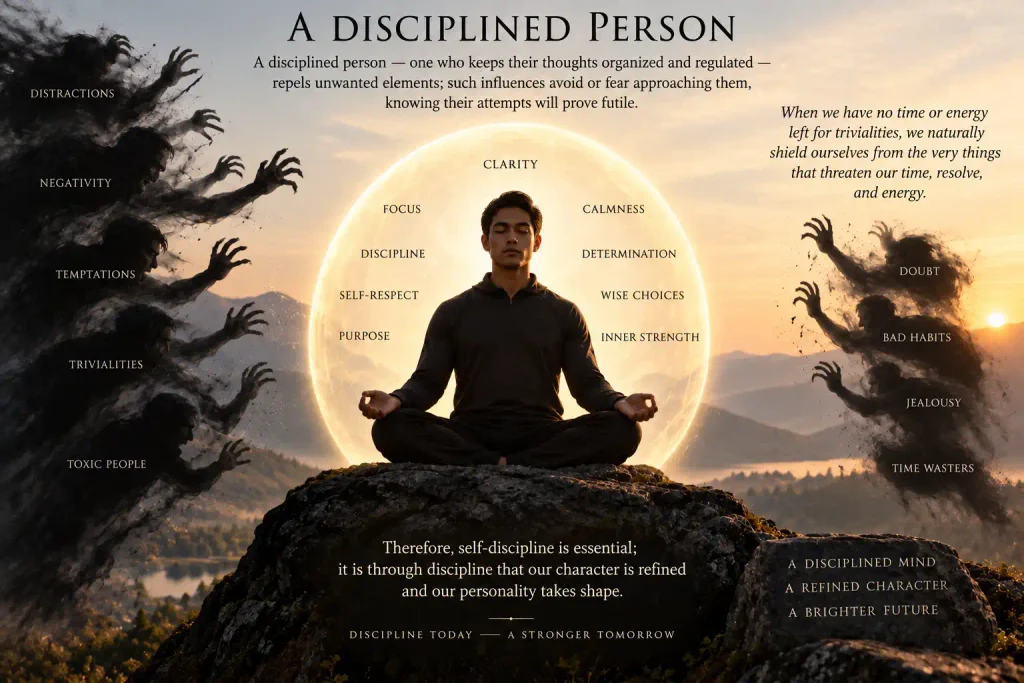
How to Have A Disciplined Mind
Leading a disciplined lifestyle may initially seem challenging, but maintaining consistency transforms it into a natural part of our daily routine. First, we form habits; then, those habits shape us. While bad habits might offer fleeting pleasure, they prove detrimental to our lives in the long run. Conversely, adopting good habits may require some initial effort, but they ultimately make our lives smoother and more successful. Water flows downward effortlessly, requiring no extra energy, whereas an upward flow demands additional energy; the higher the ascent, the greater the energy required.
Thus, discipline helps harness our energy and channel it in the right direction. A disciplined mind essentially means having the freedom to think whatever we choose at any given moment—unbound by any constraints, even those imposed by our own thoughts. When the mind is disciplined, the right actions naturally unfold in the right direction without requiring us to expend excessive energy. Consequently, our productivity and efficiency improve.

A Disciplined Mind leads to A Desired Destiny
When the mind becomes controlled, steady, and disciplined, the intellect follows suit; it transforms into wisdom, constantly guiding us along the righteous path. Stability in the mind and intellect fosters clear thinking and profound insight. As we turn inward, the allure of the external world diminishes, and the stability of the mind and intellect naturally deepens. This practice cultivates a tendency for introspection and leads to self-realization. It is a primary and crucial stage of meditation. Through this, one begins to experience the inner quality of peace, leading to a state of happiness that can never be attained through the external senses.
Points to Ponder
- How would you define an undisciplined mind?
- Have you ever tried to discipline your mind?
- What are the things that have been the determining factors in your success or failure?
- What would you do to master your mind?
- What are the benefits of mastering it?