

Table of Contents
In the previous blog post, we learned from Verse 21 of Chapter 5 of the Shrimad Bhagavad Gita that true happiness lies in remaining detached from sensory pleasures and abiding in the realization of one’s true self. Beyond this, supreme happiness is attained when one connects with the Divine through Yoga.
Journey from Sorrow to True Happiness
In this post, we will explore how to experience true happiness effortlessly. Based on our experiences, we all arrive at the conclusion that sensory pleasure is fleeting; once experienced, the mind repeatedly gravitates toward it. This creates a vicious cycle wherein a person, trapped, stifles their conscience and drifts onto a wrong path, leading only to harm.
To remain drawn to such pleasures – even after realizing this truth through one’s own and others’ experiences – betrays a weak mindset or a lack of willpower. Even if poison tastes delicious for a few moments, the knowledge that it leads to death makes it something to be utterly shunned. Similarly, regarding sensory pleasures as akin to poison is the first step toward renouncing them through the intellect. This does not mean abandoning the use of material resources altogether; rather, it means relinquishing attachment to them. Such detachment becomes possible only when we experience true happiness that transcends the senses. For this, realizing one’s true identity is essential.
Is our identity merely this figure of flesh and bone, encased in skin? What distinguishes a living person from a dead one – the factor that determines whether one is deemed alive or dead?
Verse 13 of Chapter 2 of the Shrimad Bhagavad Gita reveals this mystery:
dehino ’smin yathā dehe kaumāraṁ yauvanaṁ jarā
tathā dehāntara-prāptir dhīras tatra na muhyati
it states that just as the soul passes through childhood, youth, and old age within the body, it acquires a new body after death; the wise – those of steady intellect – are never deluded or distressed by this transformation.
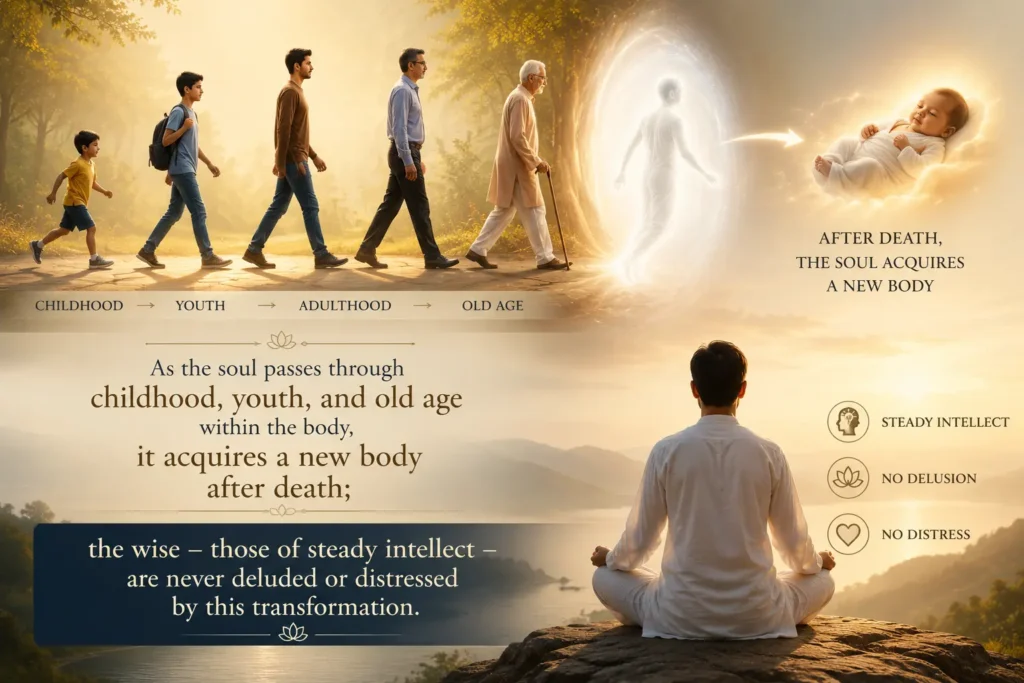
That is precisely why, upon someone’s death, we say – so-and-so has left their body… they have departed… they are no more… they have passed away. Of whom do we say this? We say it of the soul, which has left this mortal body behind.
True Identity for True Happiness
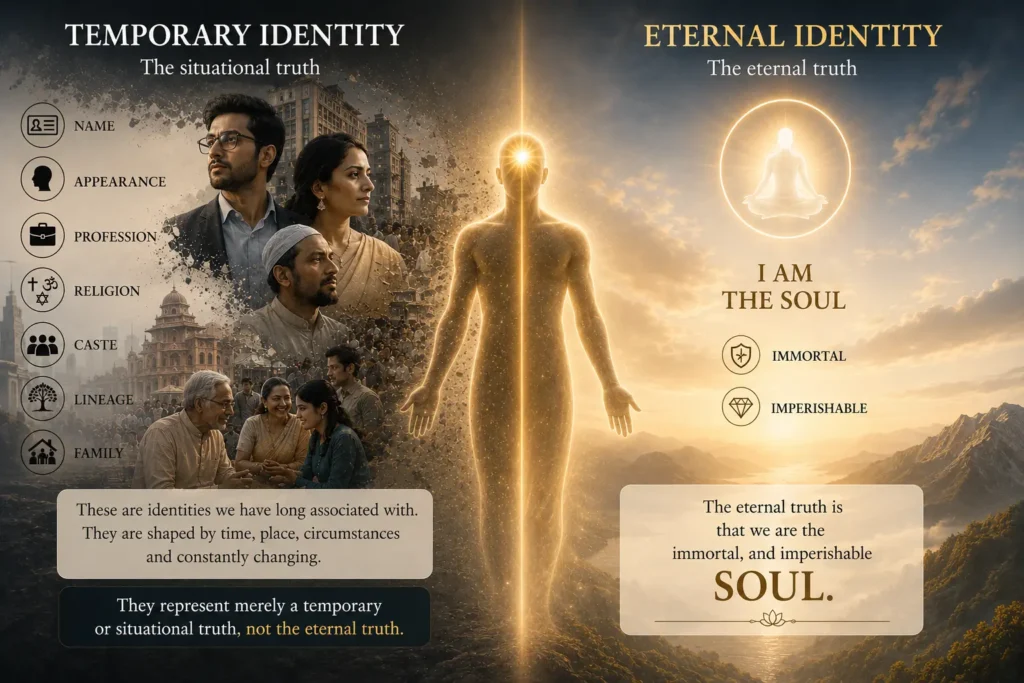
Furthermore, the 22nd verse of this same second chapter states that just as a person casts off worn-out garments and dons new ones, the soul similarly discards the old body and acquires a new one.
vāsānsi jīrṇāni yathā vihāya
navāni gṛihṇāti naro ’parāṇi
tathā śharīrāṇi vihāya jīrṇānya
nyāni sanyāti navāni dehī
These verses clarify that the identity we have long associated with – defined by our name, appearance, profession, religion, caste, lineage, or family – represents merely a temporary or situational truth, not the eternal truth. The eternal truth is that we are the ageless, immortal, and imperishable soul.
This very truth is articulated in the 23rd verse of the Gita:
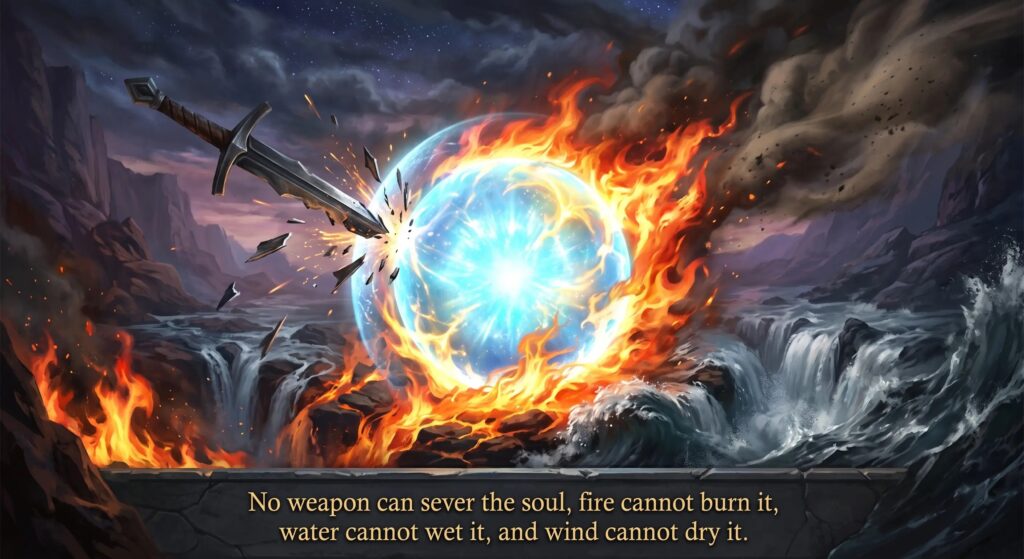
nainaṁ chhindanti śhastrāṇi nainaṁ dahati pāvakaḥ
na chainaṁ kledayantyāpo na śhoṣhayati mārutaḥ
No weapon can sever the soul, fire cannot burn it, water cannot wet it, and wind cannot dry it. When, realizing this truth, we focus our mind and intellect upon our true essence – the nature of the soul – we naturally experience spiritual bliss; this is a transcendental joy that lies beyond the reach of the senses and cannot be compared to the pleasures derived from sensory experiences.
How to Experience True Happiness beyond Sensual Pleasures
The experience of this bliss – which transcends the senses – begins by steadying one’s consciousness at the bhrukuti (the point between the eyebrows). By visualizing oneself as a radiant star, one begins to sense a profound state of spiritual peace, bliss, and an abundance of inner energy. The eighth chapter, tenth verse of the Gita states that at the moment of death – with an unwavering mind, empowered by devotion and the strength of Yoga, and by centering one’s life force (prana) between the eyebrows – a human being attains the Supreme Divine Reality.
prayāṇa-kāle manasācalena
bhaktyā yukto yoga-balena caiva
bhruvor madhye prāṇam āveśya samyak
sa taṁ paraṁ puruṣam upaiti divyam
Why wait until the moment of death? If we perform every action while remaining conscious of the soul – that vital spiritual energy – situated between the eyebrows, we can effortlessly experience communion with the Supreme Divine, the Almighty. This experience grants us a taste of transcendental bliss that endures.
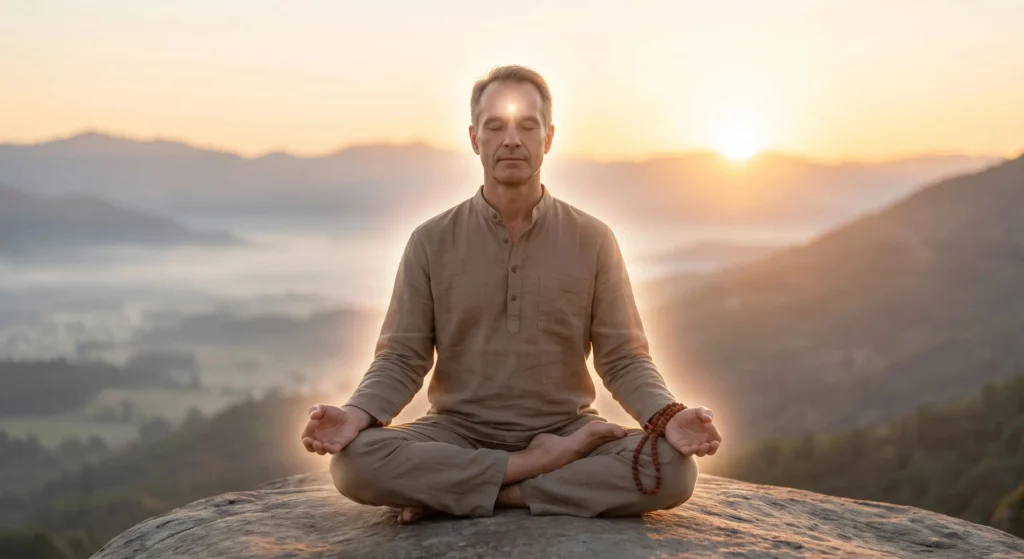
Try practicing this right now. It may require some effort initially, but you will certainly reap a wonderfully sweet reward. Practicing this with patience, sincerity, and understanding will lead you to experience deep peace and true happiness.
Points to Ponder:
- Do you really want to experience the true happiness?
- How would you define it in your own words?
- What are the co-ordinates of true happiness?
- Who experiences the true happiness?
- Do you believe that you are an eternal entity, separate from this body?
- Are you ready to experience true happiness beyond the sensual pleasures?